
Future Tech and Smart Living shouldn’t mean dealing with bulbs that drop dead every time your Wi-Fi hiccups; that’s not smart tech—that’s just plastic junk with an antenna.
For years, “smart home” just meant juggling a dozen clunky apps, shelling out monthly fees for basic cloud storage, and arguing with voice assistants that can’t understand anything you say. Honestly, none of that ever felt very futuristic. The real step forward is a home that just works — quietly, reliably, on its own, and with your privacy intact. No need for a fridge covered in screens or another login just to turn on a lamp.
If you actually love tech, it’s time to move past the flashy, disposable gadgets and start building something that’s built to last.
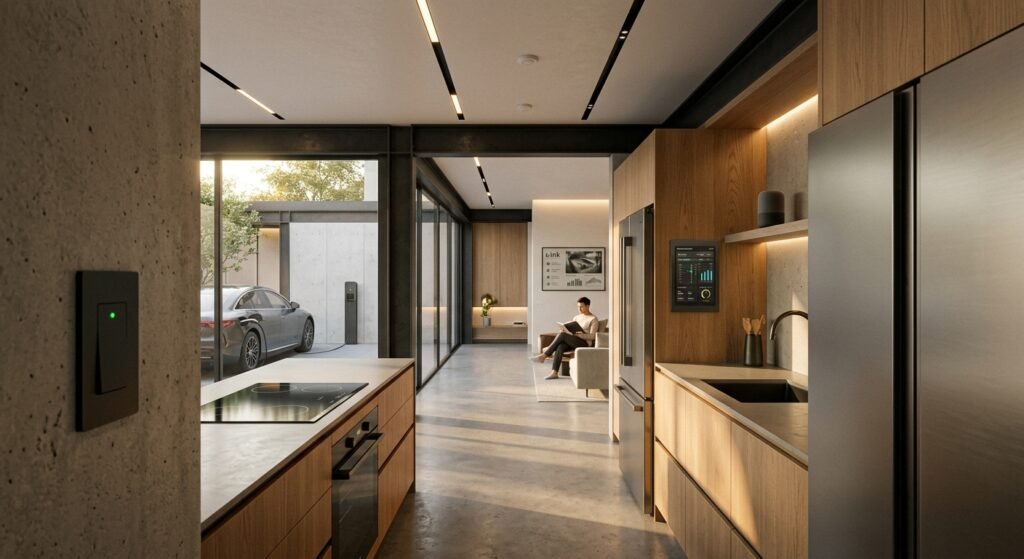
Leave the Cloud — Bring smarts home
The big problem with old “connected” setups was the cloud. The moment a manufacturer nuked a server or botched an update, your light switches became useless. Thankfully, that whole era’s fading out, mostly because we finally have two real standards: Matter and Thread.
Matter lets Apple Home, Google Home, Home Assistant, and Alexa all speak the same language over your local network. Thread creates a low-power mesh network that doesn’t clog your Wi-Fi, and if one device drops, the rest reroute and keep working.
– Lose the cheap Wi-Fi bulbs: Swap those out for Thread or Zigbee versions. Each hardwired Thread bulb actually strengthens your network instead of fighting with your phone for bandwidth.
– Run everything locally: Want control? Host Home Assistant or something similar on a spare mini PC or Raspberry Pi. Add a Thread border router, and now your automations run instantly—in under 10 milliseconds—and your private life actually stays private.
Forget basic motion sensors — use mmWave radar
Those old PIR sensors only respond if you move. Sit too still in the living room and you’ll end up in the dark. mmWave presence sensors fix that: they notice even tiny movements, like breathing.
Map your rooms: The smarter mmWave sensors (think Aqara FP2 or custom setups with ESPHome) don’t just see if you’re there—they know where you are. Step into your office, and task lighting jumps on. Sit at your desk, your monitor wakes up. Head to the door, and devices power down.
Smarter routines: Now you can actually automate based on who’s there and what they’re actually doing. No more showering in darkness because PIR couldn’t see through frosted glass. Set the bathroom fan to run for as long as you’re there—and turn off only after you leave.
Keep sensitive data in your house with local NPUs
Sending video feeds to mysterious server farms just to check if a squirrel or a stranger triggered your camera is slow and risky. Locally processed neural networks are the new standard.
– Instant object recognition: With tools like Frigate NVR and a Google Coral or Hailo-8 accelerator, you can run real-time object detection across multiple video feeds at 100+ frames per second.
– Automations that make sense: Tell your system to announce when a courier’s at the door but ignore every passing cat. Your camera will know the difference without pinging the cloud.
Upgrade your panel, not just your plugs
Real smart homes aren’t just about gadgets plugged into outlets — they track and manage power at the source. With how unpredictable the power grid and rates are getting, wasting electricity costs more every year.
– Smart circuit panels: Solutions like Span or Emporia Vue (for retrofits) let you see exactly how much energy each big appliance uses.
– Slash your bills automatically: Link your energy tracker to real-time rates. Set it so your water heater, battery, or EV only charges during the cheapest hours. When rates spike, non-essential devices power down without you lifting a finger.
If you want a home that still works five years from now, here’s what really matters:
1. The wall switch must always work. If guests can’t flip a lamp on without yelling at Alexa, your setup missed the point.
2. Go local, skip the cloud. If a device needs a proprietary cloud to work, don’t even buy it.
3. Focus on performance, not a pretty app. A system that reacts instantly to you is much smarter than something that forces you to talk to it.
A smart home isn’t about gadgets with fancy names or yet another subscription. It’s about efficiency, privacy, and simplicity so seamless it actually gets out of your way.